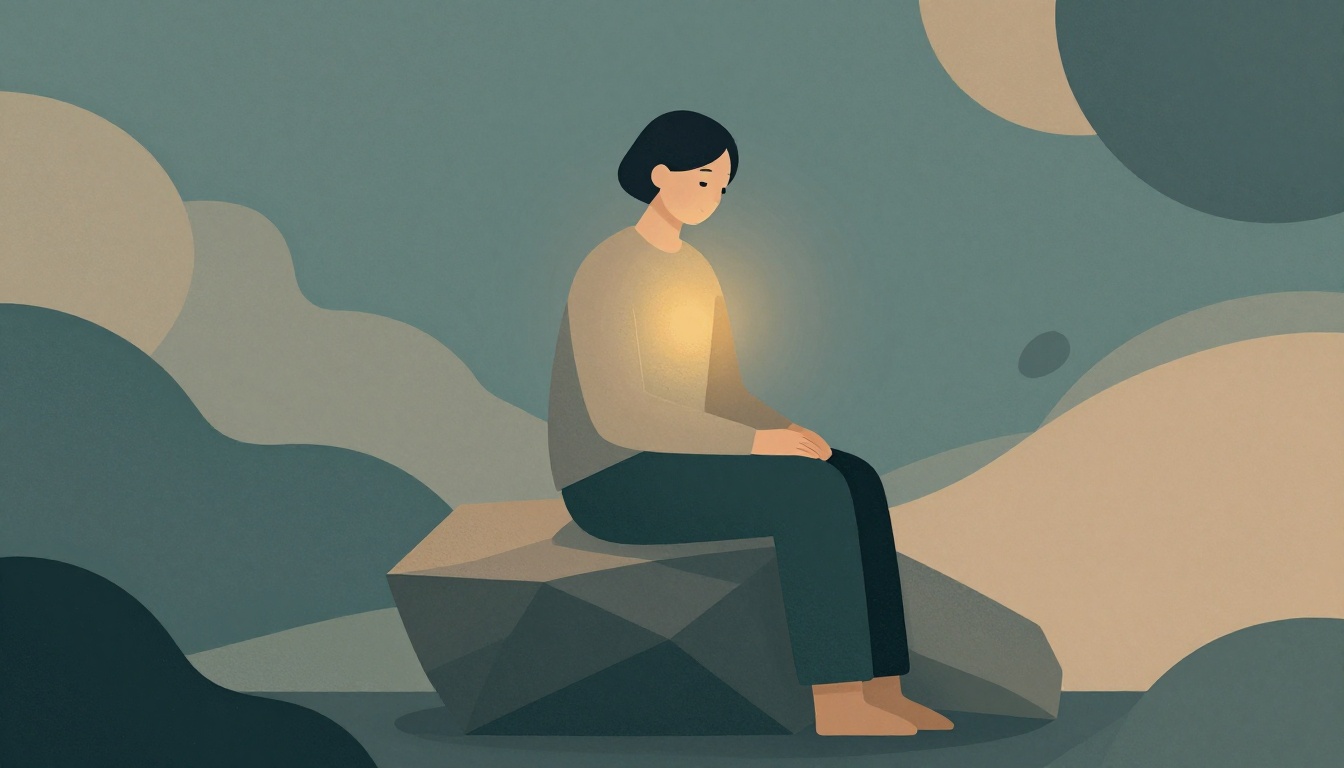
You wake up with your mind already racing. The to-do list, the email you didn't send, the conversation you're dreading. That tightness in your chest is familiar. Daily anxiety has become your unwanted companion.
But here's the good news: you can change that. Research shows that just 10 minutes of daily mindfulness can significantly reduce anxiety and improve your overall wellbeing. A 2024 study published in the British Journal of Health Psychology found that participants who practiced mindfulness for 10 minutes a day reported decreased anxiety and a more positive attitude compared to those who didn't (source).
Mindfulness isn't about emptying your mind. It's about training your attention to stay in the present moment, so you stop feeding the anxious thoughts about the future.
What is the minimum daily mindfulness duration shown to reduce anxiety in a 2024 study?
Select one answer.
The science behind why it works
Psychologists have found that mindfulness meditation changes your brain and biology in positive ways (source). It reduces activity in the amygdala, your brain's fear center, and strengthens the prefrontal cortex, which handles rational thinking.
When you practice mindfulness regularly, you build a new response to stress. Instead of reacting automatically with panic, you create a pause. In that pause, you choose how to respond.
Your 10-minute daily mindfulness routine
You don't need a meditation cushion or a silent room. You just need 10 minutes and a willingness to try.
Step 1: Set your intention (1 minute)
Sit comfortably. Close your eyes. Take three deep breaths. Say to yourself: "For the next 10 minutes, I will focus on my breath. When my mind wanders, I will gently bring it back."
Step 2: Breath awareness (4 minutes)
Breathe naturally. Focus on the sensation of air entering and leaving your nostrils. Notice the rise and fall of your chest. When thoughts come—and they will—simply label them "thinking" and return to your breath.
Step 3: Body scan (3 minutes)
Shift your attention to your body. Start at the top of your head and slowly move down. Notice any tension in your jaw, shoulders, or stomach. Don't try to change it. Just observe. Breathe into those areas.
Step 4: Loving-kindness (2 minutes)
Bring to mind someone you care about. Silently repeat: "May you be happy. May you be healthy. May you be safe." Then turn that same wish toward yourself.
Quick mindfulness exercises for anxious moments
When anxiety hits during the day, use these micro-practices:
- Box breathing: Inhale for 4 counts, hold for 4, exhale for 4, hold for 4. Repeat 3 times.
- Mindful seeing: Look at one object for 60 seconds. Notice its color, texture, shape. Don't judge it. Just see it.
- Grounding: Name 5 things you can see, 4 you can touch, 3 you can hear, 2 you can smell, and 1 you can taste.
Common mistakes to avoid
- Expecting instant results: Mindfulness is a skill. It takes weeks of consistent practice to see changes.
- Trying too hard: Relaxed effort works better than forcing concentration.
- Judging yourself: Wandering thoughts are normal. The practice is noticing and returning, not being perfect.
How to build the habit
Pick a consistent time each day. Morning works well because it sets the tone. Use an app or a timer. Start with just 5 minutes if 10 feels too long. The key is consistency, not duration.
How the Resident Expert Can Help
Surabhi Kalsi, a spiritual teacher and wellbeing coach at Grow with Surabhi, offers personalized coaching and Angelic Reiki sessions that integrate mindfulness with deeper spiritual practices. Her approach helps you move beyond surface-level anxiety relief to lasting inner peace. Whether you're new to mindfulness or looking to deepen your practice, Surabhi's mentor-led programs provide the guidance and support you need to transform your relationship with anxiety.
Quiz
What is the minimum daily mindfulness duration shown to reduce anxiety in a 2024 study?