According to the 2023 study noted in the research, what did guided imagery show potential to enhance?
Select one answer.
Why emotional blocks feel stuck in your body
If you have ever felt a tight chest, a knotted stomach, or shoulders that will not drop, you are not imagining it. Suppressed emotions are often stored in the body as muscle tension and discomfort, which is why talk alone sometimes does not shift them. Guided visualization gives you a structured way to find that tension and let it move.
Guided imagery is a mind-body technique that uses mental visualization to promote relaxation, healing, and personal growth. It engages all five senses to create vivid mental experiences that can influence both emotional and physical health, according to GoodTherapy.
What the research says about guided imagery
Guided imagery is not just a nice idea. A 2023 study found that guided imagery has the potential to enhance attentional control by increasing alpha brainwave power and reducing stress, as reported in PubMed Central. Other research indicates that guided imagery can significantly reduce psychological stress and emotional distress, per Psychology Fanatic.
Visualization techniques such as guided imagery and body scanning can improve your well-being, and it helps to choose a technique that matches your needs, notes Healthline.
A step-by-step guided visualization you can do today
Set aside 10 to 20 minutes in a quiet, comfortable space. Sit or lie down, and keep a glass of water nearby.
- Settle and breathe. Close your eyes and take slow breaths. Let your body sink into the surface beneath you.
- Scan for the block. Move your attention through your body. Notice where you feel tightness, heat, or heaviness. Do not judge it.
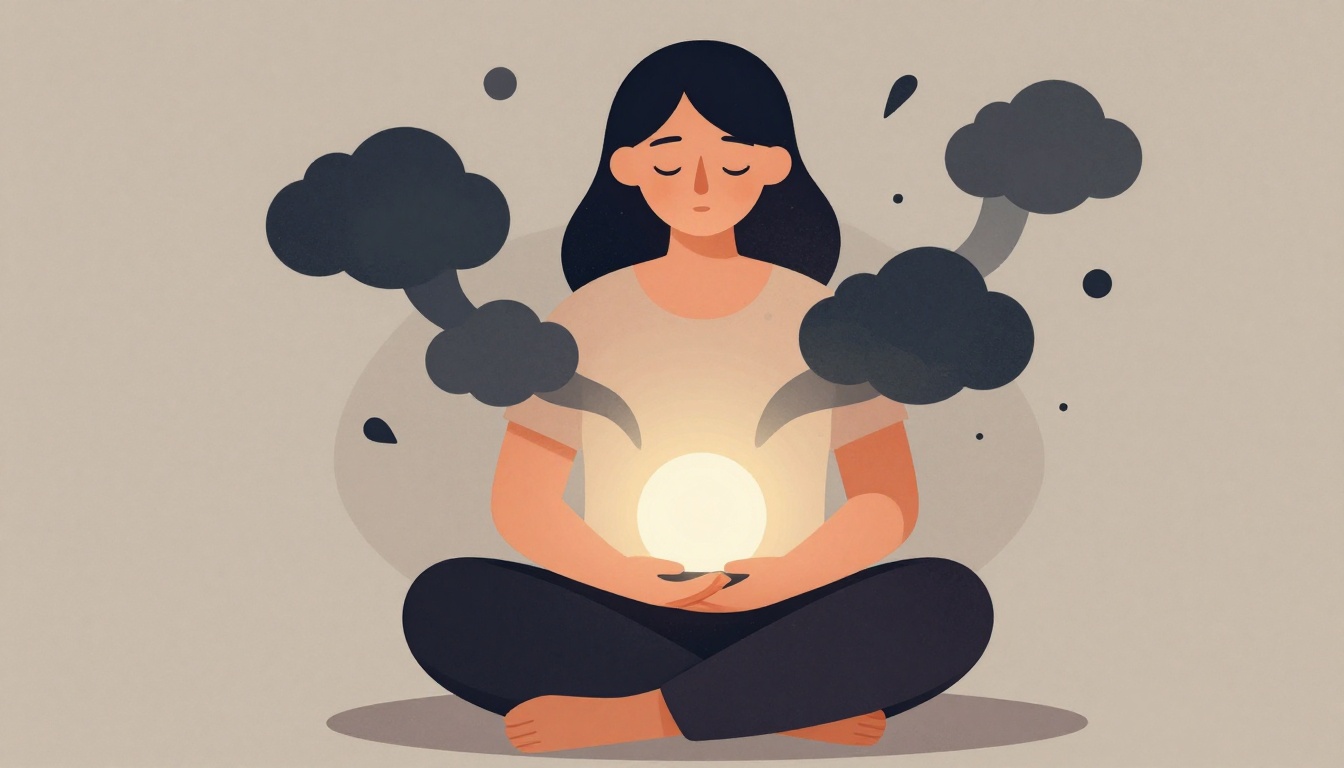
- Give it a shape or color. Let the sensation become an image, such as a dark cloud, a knot, or a stone. This is the emotional block made visible.
- Breathe into it. Imagine each inhale carrying a soothing light to that area. With each exhale, see the image soften, lighten, or dissolve.
- Release and replace. As the image fades, imagine spaciousness filling the area. Say silently, "I acknowledge this feeling, and I choose to release it."
- Return gently. Wiggle your fingers and toes, and open your eyes slowly. Drink water and rest for a minute.
This mirrors the approach used in guided emotional release meditations, where breathwork and body scanning help you find areas of discomfort and release them from body and mind, as described by Insight Timer.
Common mistakes that keep blocks in place
- Forcing the release. Pushing hard creates more tension. Let the image change at its own pace.
- Skipping the body. If you stay only in your head, you miss where the emotion is stored. Always include a body scan.
- Judging what comes up. Anger, sadness, and frustration are natural responses. Acknowledging them without judgment is part of the process.
- Doing it once. With regular practice, it is possible to start seeing results within a few weeks or months, according to Psych Central.
A simple weekly practice plan
- Days 1-3: 10 minutes of the full visualization above.
- Days 4-7: 5 minutes of body scan plus one image release.
- Week 2 onward: Repeat, and note any shifts in sleep, mood, or physical tension.
If difficult emotions feel overwhelming or you have a trauma history, work with a qualified practitioner rather than pushing through alone.
How the Featured Expert Can Help
Surabhi Kalsi is a spiritual teacher and wellbeing coach. Through Grow with Surabhi, she offers private coaching, teacher trainings, Angelic Reiki sessions, and online programs designed to help you cultivate spiritual and practical wellbeing. If you want personalized, mentor-led support for emotional release and energy healing, you can explore her offerings directly.