
When stress hits, your mind races and your body tenses. You might feel untethered, as if a storm is blowing your thoughts in every direction. Grounding meditation offers a way to anchor yourself in the present moment, calming your nervous system and reducing stress hormones. This guide provides practical, research-backed techniques you can use anywhere, anytime.
What is the 5-4-3-2-1 grounding technique primarily based on?
Select one answer.
What is grounding meditation?
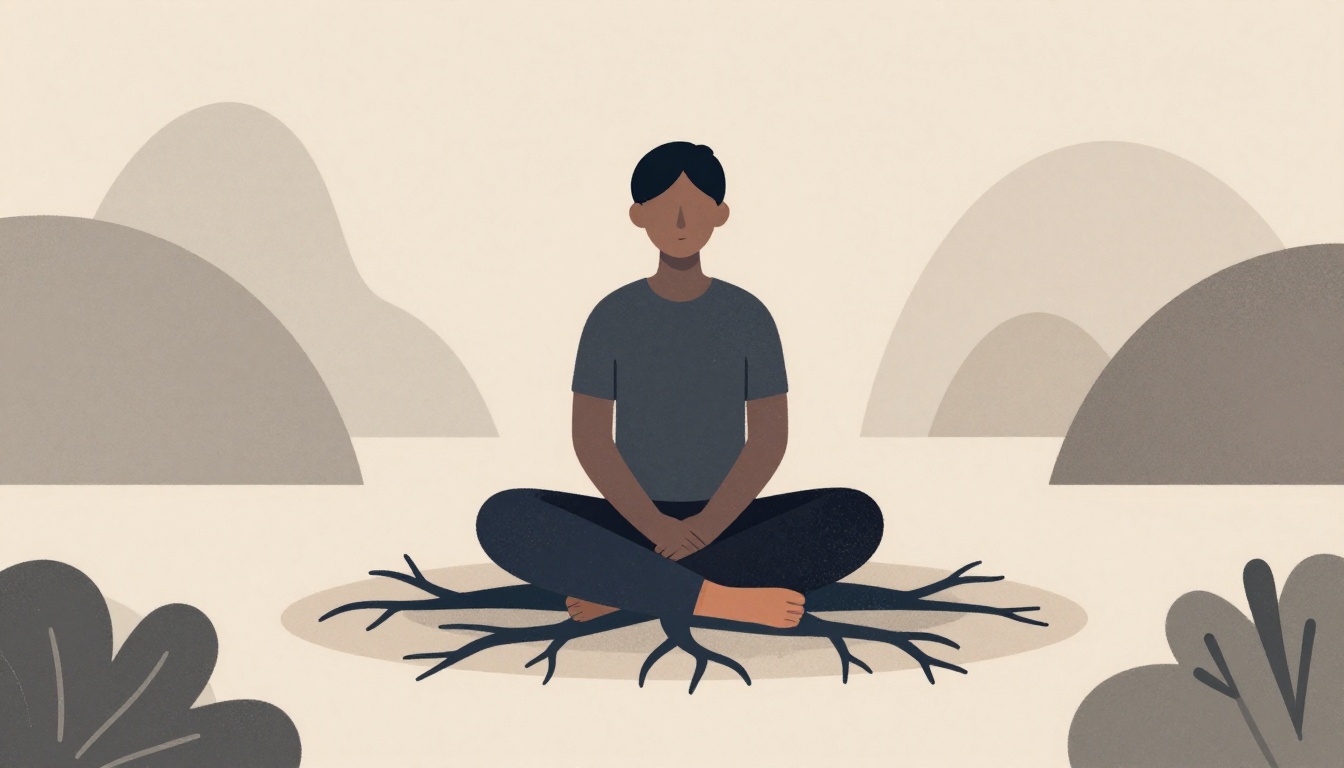
Grounding meditation is a set of simple strategies that help calm anxiety by focusing on the here and now. Think of your mind as a tree and your anxiety as a storm blowing your branches in all directions. Grounding techniques are the roots that keep you stable and safe, like a tree in strong winds. They work by turning your attention away from worries and refocusing on the present moment through your senses and body.
According to Cleveland Clinic, grounding techniques can reduce stress hormones and calm your body, mind, and soul. They are often used to help with anxiety, stress, PTSD, and overwhelming emotions. The goal is not to eliminate stress entirely—that's an important part of your nervous system—but to prevent it from causing constant distress.
The 5-4-3-2-1 sensory method
One of the most effective and easy-to-remember grounding techniques is the 5-4-3-2-1 method. It uses your five senses to pull your focus back from anxious thoughts. Here's how to do it:
- Name 5 things you can see. Look around and notice details—colors, shapes, textures. A chair, a plant, a shadow.
- Name 4 things you can touch. Feel the fabric of your clothes, the floor under your feet, the smooth surface of a table.
- Name 3 things you can hear. Listen for ambient sounds—a fan humming, birds outside, distant traffic.
- Name 2 things you can smell. Take a deep breath and identify scents—coffee, fresh air, or even the smell of rain.
- Name 1 thing you can taste. Notice the taste in your mouth or take a sip of water and focus on its flavor.
This technique is praised by Calm as a simple exercise for calming the mind that can alleviate anxiety in minutes. It's especially helpful for calming the body's fight-or-flight response.
Body-based grounding: breath and movement
Physical grounding techniques connect you to your body and the earth, providing immediate relief. Try these:
- Deep breathing: Take 5 long, deep breaths through your nose, and exhale through puckered lips. This activates your parasympathetic nervous system, promoting relaxation.
- Foot stomping: Place both feet flat on the floor and stomp them several times. Feel the solid ground beneath you. This helps you reconnect with your physical presence.
- Progressive muscle relaxation: Breathe in and tense a muscle group (like curling your toes), hold for 5-10 seconds, then breathe out and relax. Move through your body from feet to face. Harvard Health recommends this technique to release physical tension.
These methods are simple but powerful. They shift your attention from mental spirals to physical sensations, grounding you in the now.
Earthing: the science of connecting to the earth
Earthing, also called grounding, involves direct skin contact with the earth's surface—walking barefoot on grass, sand, or soil. The theory is that the earth's electrical energy rebalances your body's own charge. While research is still emerging, some studies show promising results.
A 2025 study found that earthing mats reduced stress, insomnia severity, and daytime sleepiness compared to before use. Other research suggests grounding can normalize the day-night cortisol rhythm, which is crucial for managing stress. Healthline reports that after one week of earthing therapy, participants reported lower levels of pain, stress, depression, and fatigue.
While earthing is safe for most people, it should complement—not replace—evidence-based medical care. But spending a few minutes barefoot in your yard or a park can be a simple addition to your stress-relief toolkit.
A 5-minute grounding meditation you can do now
Here's a quick practice you can use whenever stress spikes:
- Find a quiet spot. Sit comfortably with your feet flat on the floor. Close your eyes if you can.
- Take three deep breaths. Inhale through your nose, exhale through your mouth. Feel your belly rise and fall.
- Scan your body. Notice any areas of tension—your jaw, shoulders, hands. Consciously relax them.
- Feel your feet. Press them into the floor. Imagine roots growing from your feet into the earth, anchoring you.
- Repeat a calming phrase. Silently say, "I am here, I am safe, I am grounded."
- Return slowly. When you're ready, open your eyes and take a final deep breath.
This practice can be done in just five minutes and is designed to reduce symptoms of anxiety and overwhelm, helping you experience more ease and calm.
Quiz: Test your grounding knowledge
Before you go, check your understanding with this quick quiz.
What is the 5-4-3-2-1 grounding technique primarily based on?
- A. Using your five senses to focus on the present
- B. Repeating positive affirmations
- C. Visualizing a peaceful scene
How the Featured Expert Can Help
Surabhi Kalsi, spiritual teacher and wellbeing coach at Grow with Surabhi, offers private coaching, teacher trainings, Angelic Reiki sessions, and online programs to help you cultivate spiritual and practical wellbeing. Her personalized, mentor-led approach integrates coaching with energy healing, ideal for deepening your grounding practice and overall growth. Visit her website to explore free resources and programs tailored to your unique path.