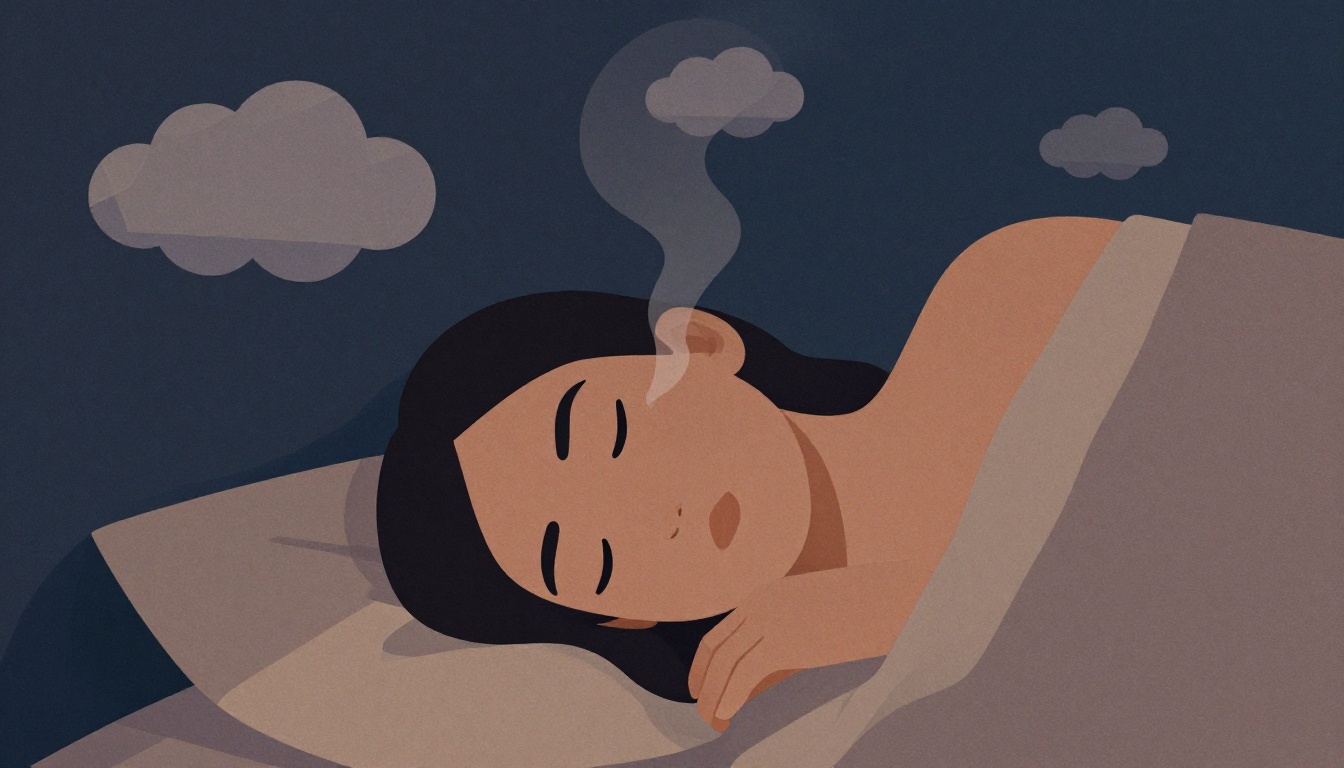
After a long day, your mind often keeps replaying conversations, deadlines, and worries. This mental chatter can make it hard to unwind, leaving you tense and restless at bedtime. A short evening meditation can be the reset button you need. Research shows that meditation helps lower heart rate, ease muscle tension, and reduce stress hormones, which are all essential for transitioning into sleep (The Mindfulness App). Even a brief practice can improve sleep quality and reduce symptoms of insomnia (Cleveland Clinic).
This 10-minute evening meditation is designed to help you consciously release the day's stress. It combines breath awareness, a body scan, and a simple letting-go visualization. You can do it seated or lying down in bed. The goal is not to empty your mind, but to gently guide your attention away from racing thoughts and into the present moment.
What does the 4-7-8 breathing technique involve?
Select one answer.
The 10-Minute Evening Meditation Script
Minute 0–1: Settle In
Find a comfortable position, either sitting upright with your back supported or lying down. Close your eyes and take a few natural breaths. Let your shoulders drop away from your ears, relax your jaw, and soften your tongue. Feel the weight of your body being supported by the floor or bed. This simple act of settling signals to your nervous system that it's safe to begin unwinding.
Minute 1–3: Connect with Your Breath
Bring your awareness to your natural breath. Don't try to change it; just notice the sensation of air entering and leaving your nostrils. If your mind wanders to a stressful thought, gently label it "thinking" and return to the breath. To deepen relaxation, you can try the 4-7-8 breathing technique: inhale through your nose for 4 seconds, hold for 7 seconds, and exhale through your mouth for 8 seconds. Repeat this cycle four times (NHS). This pattern encourages slower breathing and a lower heart rate.
Minute 3–7: Body Scan for Tension
Shift your attention from your breath to your body. Start at the top of your head and slowly move down: forehead, eyes, jaw, neck, shoulders, arms, hands, chest, belly, hips, legs, and feet. For each area, simply notice any sensation—tightness, warmth, or tingling. As you exhale, imagine sending your breath to that part of the body and allowing it to soften. This progressive awareness helps release physical tension that has built up during the day (Mindful).
Minute 7–9: Let Go of the Day
Now, visualize the day's events as a series of clouds passing across a vast sky. Each worry, frustration, or to-do item is just a cloud—it comes, and it can drift away. With each exhale, imagine letting go of one specific stressor. You don't need to solve it now; you're simply giving yourself permission to set it down until tomorrow. This practice of releasing can ease the ruminating mind that often keeps us awake (Mindfulness Exercises).
Minute 9–10: Close with Gratitude
To end, bring to mind one small thing from today that you're grateful for—a kind word, a good meal, or a moment of peace. Let that feeling of gratitude fill your chest. Then, gently bring your awareness back to your breath. When you're ready, slowly open your eyes. If you're in bed, allow yourself to drift into sleep naturally.
Tips for Making It Stick
- Consistency beats duration. A 10-minute practice every evening is more effective than an occasional longer session. Even short, consistent sessions can make a difference in reducing nighttime worry (The Mindfulness App).
- Create a wind-down routine. Dim the lights, put away screens, and do this meditation at the same time each night. This signals to your body that sleep is coming.
- Use guided audio if needed. If you're new to meditation, following a recorded guide can help you stay focused. Just remember to turn off your phone screen to avoid light exposure.
- Don't judge your practice. Some nights your mind will be busier than others. That's normal. The act of noticing and returning is the practice itself.
Quiz: Test Your Understanding
Before you go, check your knowledge with this quick question based on the article.
What does the 4-7-8 breathing technique involve?
- Inhale for 4 seconds, hold for 7 seconds, exhale for 8 seconds
- Inhale for 7 seconds, hold for 4 seconds, exhale for 8 seconds
- Inhale for 8 seconds, hold for 7 seconds, exhale for 4 seconds
Correct answer: Inhale for 4 seconds, hold for 7 seconds, exhale for 8 seconds (as described in the meditation script above).
How the Featured Expert Can Help
Surabhi Kalsi, spiritual teacher and wellbeing coach at Grow with Surabhi, offers private coaching, teacher trainings, Angelic Reiki sessions, and online programs to help you cultivate both spiritual and practical wellbeing. Her personalized, mentor-led approach can deepen your meditation practice and support your overall growth.