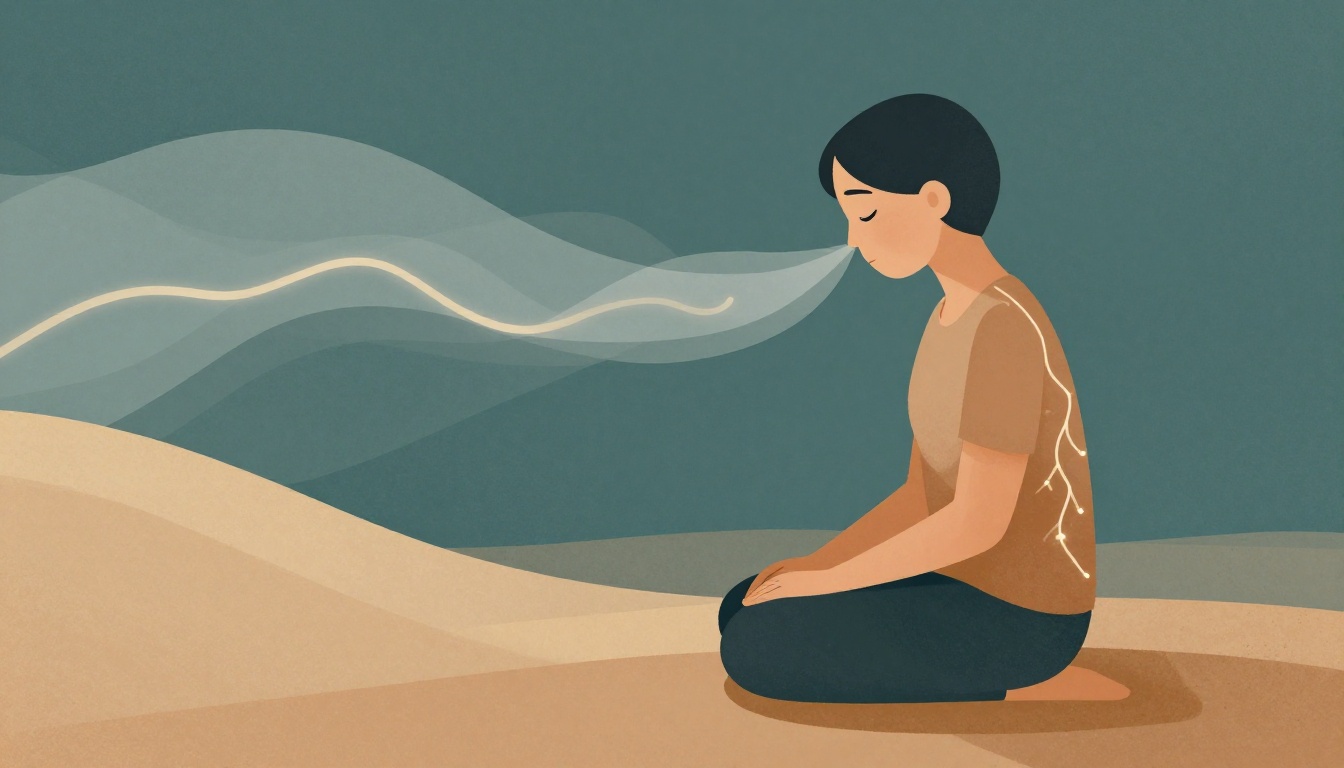
When stress keeps your mind racing, your shoulders tight, and your heart pounding, your nervous system is stuck in "fight or flight." Chronic stress, anxiety, and trauma can lock your body into survival mode, making it hard to relax even when the threat is gone. The good news: you can train your body to shift back into "rest and digest" using your breath. Breathing techniques directly influence the vagus nerve, the main pathway of the parasympathetic nervous system, signaling safety to your brain and calming your body (Advanced Counseling Bozeman). Here are five practical, research-backed techniques you can use today.
Which breathing technique involves a double inhale followed by a long exhale?
Select one answer.
1. Box breathing (4-4-4-4)
Box breathing, also called square breathing, is a structured technique used by athletes, healthcare professionals, and the military to ground under pressure. It calms racing thoughts and creates focus.
How to practice:
- Inhale slowly through your nose for 4 counts.
- Hold your breath for 4 counts.
- Exhale gently through your mouth for 4 counts.
- Pause for 4 counts before the next inhale.
- Repeat for 4–5 rounds.
The even rhythm slows your heart rate and activates the parasympathetic nervous system, signaling safety to your body (Dr. Leslie Hemedes).
2. 4-7-8 breathing
This technique extends your exhale longer than your inhale, which is key to activating the parasympathetic nervous system. Studies show that exhaling for longer than you inhale significantly reduces anxiety (Shift Collab).
How to practice:
- Inhale quietly through your nose for 4 counts.
- Hold your breath gently for 7 counts.
- Exhale slowly and audibly through your mouth for 8 counts.
- Repeat for 4 cycles.
This pattern is especially useful before sleep or during moments of high stress.
3. Coherent breathing (5-6 breaths per minute)
Coherent breathing involves breathing at a rate of about five to six breaths per minute, which synchronizes your respiratory and cardiovascular systems, promoting relaxation and emotional stability (Open).
How to practice:
- Inhale through your nose for a count of 5 or 6.
- Exhale through your nose for the same count.
- Maintain this steady rhythm for at least 5 minutes.
This slow, even pace enhances heart rate variability (HRV), a marker of nervous system resilience.
4. Physiological sigh (double inhale)
This technique uses a double inhale followed by a long exhale. It's a rapid way to reduce stress in minutes.
How to practice:
- Take a deep breath in through your nose.
- At the top, take a second, shorter inhale to fully expand your lungs.
- Exhale slowly and completely through your mouth.
- Repeat 3–5 times.
The double inhale helps reinflate collapsed alveoli and the long exhale activates the vagus nerve, lowering heart rate (BBC).
5. Humming breath (Bhramari)
Humming breathing is as effective as slow-paced breathing in enhancing HRV and relaxation, according to a 2025 study (ScienceDirect). The vibration stimulates the vagus nerve through the movement of the diaphragm and vocal cords.
How to practice:
- Inhale deeply through your nose.
- Exhale with a humming sound, keeping your mouth closed.
- Feel the vibration in your chest and throat.
- Repeat for 5–10 breaths.
This technique also increases oxygen intake and relaxes the nervous system by gently massaging the vagus nerve (Therapeutic Counseling).
Building a daily practice
Start with just 2–5 minutes a day. Consistency matters more than duration. You can use these techniques:
- Morning: Coherent breathing to set a calm baseline.
- Midday stress: Box breathing or physiological sigh for a quick reset.
- Before bed: 4-7-8 breathing or humming breath to wind down.
Remember: slow breathing at around six breaths per minute with the diaphragm improves HRV, optimizes gas exchange, and stimulates the vagus nerve (Buteyko Clinic).
Quiz: Test your knowledge
Which breathing technique involves a double inhale followed by a long exhale?
- Box breathing
- 4-7-8 breathing
- Physiological sigh
Correct answer: Physiological sigh (option 3).
How the Featured Expert Can Help
Surabhi Kalsi, spiritual teacher and wellbeing coach at Grow with Surabhi, offers private coaching, teacher trainings, Angelic Reiki sessions, and online programs to help you cultivate spiritual and practical wellbeing. Her personalized, mentor-led approach integrates coaching with energy healing, supporting your unique growth path. Visit surabhikalsi.com to explore her offerings and free resources.